
“Sometimes the fitness is there but it just doesn’t come together on the day, that’s why you just gotta keep taking a crack at it”. These words came out of my friend and neighbor Ashley’s mouth on a Sunday morning training run several weeks ago, and they stuck.
I signed up for the Toronto Marathon 2 days after Boston, before I could even fathom walking down a flight of stairs properly. If I’m honest, I was frantically looking for another marathon to do the evening of Boston and it’s a miracle I had the self control to even sleep on it. I went as far as to hone my skills of persuasion and try to get a bib for the sold-out Vancouver Marathon – I already had non-refundable flights booked to Vancouver that weekend to cheer on Andrei,who ultimately wasn’t able to run due to an injury. In the end, I was drawn towards the (conveniently not sold-out) Toronto Marathon the same weekend, May 5th. I had run it before, many of my early-day marathons had taken place through the iconic streets of Toronto and I would be able to stay with and visit my parents as a bonus. I booked some cheap flights and took the plunge to register. This meant I had 20 days between the two races to regroup, recover and get my head in the game.
Recovery
I have, on numerous occasions, signed up for back-to-back marathons. Having walked or run significantly below my marathon pace for most of the second half of Boston, I felt less aerobically fatigued than after most of my long run workouts leading up to the race. I anticipated a fast recovery. This proved to be true when it came to my overall energy levels, but my legs protested adamantly. I finally felt like I could muster a shuffle three days post-Boston, followed by a decently-paced easy run the next day. I jumped into a workout that Saturday that boosted my shrunken ego but punished my legs. My quads had still been sore, but not so sore that I couldn’t hammer a workout. My calves jumped in to pick up the slack and by Sunday I had regressed to what felt like day-after-Boston DOMs, now in both my calves and quads. When I woke up with terrible shinsplints just seven days after Boston, I worried I had made a big booboo – I truly mean it when I say my legs have never been as fucked up as they were the ~10 days after Boston. I was not respecting the recovery and I conceded to adjust, dial back my expectations of workouts and focus more on recovery. I threw a few massages at the problem, took a couple extra rest days and focused on eating well, sleeping a lot and basically just trying to chill.
Training
I won’t bore you with the details of my exact training, if you’re interested you can peep my Strava, but it sure was weird trying to recover, maintain fitness and taper at the same time. I frankensteined together a mix of workouts from past training plans with the goal of maintaining fitness while running as little as possible to do so, and to give myself some confidence that I hadn’t lost my speed. I hit a few PR’s on roads I run regularly which was enough to tell me that if my legs could recover, that fitness was still there. Andy’s words “Shed the fatigue, uncover the fitness” repeated in my head.
….But make it sneaky
Speaking of Andy and friends in general, it was extremely difficult not to tell anyone that I had signed up for Toronto. Only Andrei and my parents knew of my elaborate plan for redemption, they provided me with support, encouragement and just enough “you’re crazy but you should do it” energy. I had noticed a pattern in my marathon racing the last few years: I was choking almost every single time I raced, I knew I was getting fitter but my times kept getting worse. I had a strong suspicion that the immense support, cheer-leading, belief and excitement exuding from my social network every time I ran a race (and put that race way out there) was contributing to that choking. The encouragement was being converted to a soul-crushing pressure when it passed through the anxious filter that is my brain. Every “you’re gonna crush it!”, no matter how well-intended, genuine and thoughtful the delivery was, added a weight to my chest and upped the stakes.
I also felt that I needed to minimize external input and fully engage with my own intuition and self-belief – I needed to stop seeking the validation that I could do this elsewhere, as I had done before Boston and for as long as I can remember. I had a habit of creeping others’ workouts that had raced the time I wanted, not because I wanted to beat them, but because I was desperate for information that would reassure me that I was capable of achieving my goal. So and so ran a sub 3 and their splits were pretty similar to mine in this workout, that means I should be good, right? Sure, this approach yielded comforting, encouraging results at times but it more often had adverse effects. I stopped obsessing over what other people did that had led to their success, and just focused on me.
I also knew that while I have unlimited support from my friends, its generally very ill advised to try to race two road marathons so close together, I figured most people would think I was doing something stupid and reckless. While that may, in fact, have been true, and it’s not something I would generally recommend to anyone, I had this gut feeling that I could handle it – I didn’t want to be persuaded otherwise. I know I didn’t exactly run a covert operation, I raised eyebrows when I jumped back into what were very clearly marathon workouts so quickly, opted for a non-alcoholic beer after Dirtbags the Thursday before the race and “casually stocked up on $50 of Maurten gels and drink mix”. Those that were keen enough to pick up on these clues, seemingly knew enough not to ask what the hell I was up to. I managed not to spill the beans to anyone (even after about 10 drinks at the Disco one week out) until a few days before when I cracked and texted my go-to gal – Alex Harriss. I needed to talk through my race plan with someone that wasn’t my loving partner, or my proud-of-me-no-matter-what parents. Someone who would tell it to me straight, understand exactly where I was coming from, cheer for me to the death and not think I was an absolute moron if it all blew up in my face. Alex acknowledged I was about to ask a lot of my body, gave me sound pacing advice and shared her unmatched “LFG” energy and enthusiasm with me. She’s simply the best.
Mental Prep
Sorting out my mental game was the frog I had to eat – I knew it was the most important factor I had yet to master, but it was the most ambiguous, daunting task of them all – I didn’t know where to start. I didn’t want to have another race where I was miserable, disengaged and unwilling to hold my hand to the fire. I didn’t book flights, throw money at another race registration and give up beer for 7 days just to go jog it in again. It became more important to me to execute a race with grit, guile and grace than to achieve the time itself. I wrote out 2:56:xx and 2:59:59 5km splits on post its and lined them up under my computer monitors to stare at every day while I worked. I wrote a list of 42 people and vowed to think of each of them for a particular km during the race (spoiler alert, I failed to do this but I think the act of writing their names down alone did the trick). A few other, more practical tools fell into my lap in the last few days before the race.
First, and this may sound cheesy, but Andrei and I watched the Walmsley documentary on Youtube the Friday night before the race and it very much gave me the feels. I was so excited to watch it since we had been at UTMB last year when Jim won – we actually got to see him run through the finish chute in Chamonix – an electric moment I will remember forever. The documentary tells the story of Jim’s 6 year long journey to win UTMB, which he eventually accomplished last September. He failed several times, most remarkably in 2022 when he was seemingly the most prepared (he and his wife had literally moved to France to train in the mountains there). The film showed scenes of him leading the pack before absolutely blowing up his quads, hobbling it in and all but whimpering at an aid station. Not that I think I’m a Jim, but I related to this and I felt a perspective shift. I wasn’t failing to achieve my goals or melting down in races because there is something wrong with me, it happens to even the best athletes in the world. But I needed to learn to be like them, to take it in stride and to let go of that failure for the next time. Seeing one of the most incredible ultrarunners of all time set an audacious goal, fail to achieve it multiple times, but manage to dust himself off and use that failure to push him forward made me completely re-frame my own experiences. How could I feel embarrassed or ashamed of putting myself out there and falling short when even this incredible athlete has done the same? I let go of all my past attempts at sub 3 – they no longer served as evidence that I couldn’t do it the next time – they were simply fuel for the next fire.
How Bad Do You Want It?
On the plane to Toronto the next morning, I cracked open, for the third time, Matt Fitzgerald’s How Bad Do You Want It. I first read this in 2017 and had read it at least one more time since, but felt yet another mental refresher couldn’t hurt. If you are an endurance athlete and haven’t read this book – you are seriously missing out. Matt focuses on the role of the mind in athletic endurance and performance, presenting story after story of real athletes that experienced some sort of mental breakthrough in their sport. It’s an inspiring, relatable read with takeaways you can immediately put into practice and several themes struck a chord with me on that flight.
- Expectations influence perception, perception is reality
I had an aha moment, that I kept expecting to show up on race day and for it to feel easy. The truth is – 4:15/km pace was never going to feel easy for 42.2km, if it was, I needed a new goal. I had been showing up, subconsciously expecting not to have to suffer and the moment things felt difficult, I wasn’t ready to handle it – it would send me into a downward mental spiral until even slower paces felt harder. I needed to prepare to work hard and brace myself for when it started to hurt. This simple shift in mindset would affect my own perceived effort and once it got harder to hold my paces later in the race, it would not cause panic or alarm or impact my perceived effort – I was ready for it.
- Stop fantasizing about the outcome and envision the execution
For years I have been daydreaming about seeing the 2:59:xx on the clock as I approached the finish line. I imagined telling all my friends about my achievement, the music that would be playing in my headphones as I ran those final few steps. This was not helping me – it made it hurt even more every time I missed my time as I had to let go of this fantasy. Instead, I learned I needed to visualize my execution during the race. I pictured myself feeling nauseous but taking in gels anyways, my legs getting sore but remaining calm, the pace getting harder but summoning the resilience to hang on.
- Practice Gratitude
This one was easy, for my Dad texted me the Thursday before the race to ask me to send him my race details – we would be taking the train into the city to pick up my race kit for me. It was clear to me that my mom had researched the package pickup details on the race website and volunteered my Dad to make the 2 hour round trip, all to save me the headache of doing it myself when I landed the day before the race. My parents also picked me up from the airport and got up at 5am the morning of the race to drop me at the start – all logistics I had been anticipating sorting out myself, since I didn’t want to impose. I was so, so touched at the way they showed up to support me without me even having to ask. I also thought of Andrei who didn’t think twice when I wanted to sign up for another marathon, I had his unwavering support to get in the training I needed and spend a few hundred dollars to go chase my goal one more time. I was so grateful for the people in my corner and I vowed that even if my paces fell to shit, I was going to do my absolute best and make the most of my day in Toronto.
- Negative self talk is your worst enemy
Negative thoughts negatively impact your perceived effort, I had to get more effective at pushing them out and making room for self-belief. Here are some thoughts and questions that were no longer invited to the party in my head:
“How can you reasonably expect to run a marathon almost half an hour faster than you did three weeks ago?”
“How can you even try to run a sub 3 when your PR is over 9 minutes slower? Shouldn’t you prove yourself with a 3:05 or 3:01 first?”
“Your Coros is a dick and says you’re in 3:08 shape right now….down from 3:03 a few weeks ago. That must mean you can’t do this right now”
“Your half marathon PR equivalent isn’t where it should be to run a sub 3. Haven’t you read the reddit articles!?”
“You didn’t have a proper build and taper – have you SEEN your strava mileage graph lately!?”
I would only engage with my bad bitch self and the positive thoughts. Alex texted me before I went to bed to wish me luck and I replied:
ITS 10 DEGREES COOLER, IM JUST AS FIT AS I WAS THREE WEEKS AGO AND IM READY TO RAAAAAAAAAGE THIS TIME.
2 hours, 56 minutes and 54 seconds of joy
The start line area of the Toronto Marathon was calm, convenient and easy to navigate (despite a particularly slanderous Canadian Running Magazine article that has since been published and in no way reflects my experience at the event). I felt excited, but calm and relaxed. Once I made it into the start corral, I found myself remarking the lack of women in the sub 3:10 corral where I was slated. I liked feeling special, one of few women surrounded by fit and fast looking dudes.
The race started and off we went down Yonge street. I thought about my grandparents who lived in their home just a block or two away for over 50 years, I probably stayed at their place one of the last times I ran this race. They aren’t with us anymore, but they were in my heart as I settled into my groove, I felt grounded and in a familiar place. I wanted to find 4:14/km/3 hr pace and stay there, but the first 5km felt natural, comfortable and controlled and my paces were averaging 4:10/km. My heart rate looked high and my pace was faster than I planned, but the effort felt right and I went with it – I trusted myself and I knew I wasn’t forcing it. I managed my pace on the downhill and eased way off on the biggest climb of the course, clocking the 6th km at 4:46/km, 30 seconds slower than 3 hr marathon pace – it didn’t faze me one bit. I had sprinkled in music from the 2010’s for a dash of nostalgia, Flo Rida, Maroon5 and Gym Class Heroes setting the vibe. My watch was actually behind the first few km markers, suggesting I was actually going a little faster than my watch said – positive feedback which let me relax even more. I followed another lady for the first 7-8 km then picked up the pace and moved forward. I tuned in to my effort and looked at my watch out of curiosity, rather than letting it dictate the pace I ran. It consistently ebbed and flowed between 4:00/km and 4:15/km and when I asked myself if I was going too hard, my gut said no. As good as I felt, I didn’t indulge in the fantasy of the sub 3 finish, it was too early, I shut those thoughts down and focused on executing and enjoying. The sky dumped rain on us and then slowed to a steady sprinkle. I didn’t care, as long as I was cool and shielded by the sun. I even appreciated the light headwind for most of the race for its cooling effect – if Boston had been hell, this was heaven.
I smiled – a lot. I noticed the lead female cyclist following alongside around 13km in and actually thought I was in the female lead for a bit which was crazy but pretty fun (I quickly learned there was another gal up ahead who would finish exactly 6 minutes ahead of me). So many spectating girls and women freaked out when they saw a female run by and I soaked up their energy – I felt so proud to be holding it together with a smile. I tucked in with a group of men for a few kms but eventually broke free around 17km. There was a lot of downhill, I worried about my quads and tried not to hammer, taking smaller steps, but I also didn’t want to pump the breaks or disrupt the flow of my natural pace. My watch started to fall fairly out of sync with the km markers on the course and I was now ahead, but it didn’t bother me. I cruised through the halfway point in 1:28 something but with my watch not showing seconds on the elapsed time, I didn’t know if it was 1:28:01 or 1:28:59. Regardless, it was cool to note that this was the fastest I’d ever come through the half in a marathon by a minute or two, and over 4 minutes faster than I reached the halfway point at Boston just a few weeks earlier. I felt great, but I knew the gravy train of the downhill was over and now I would be tested on holding my pace on the rest of the course, which is pretty much dead flat.
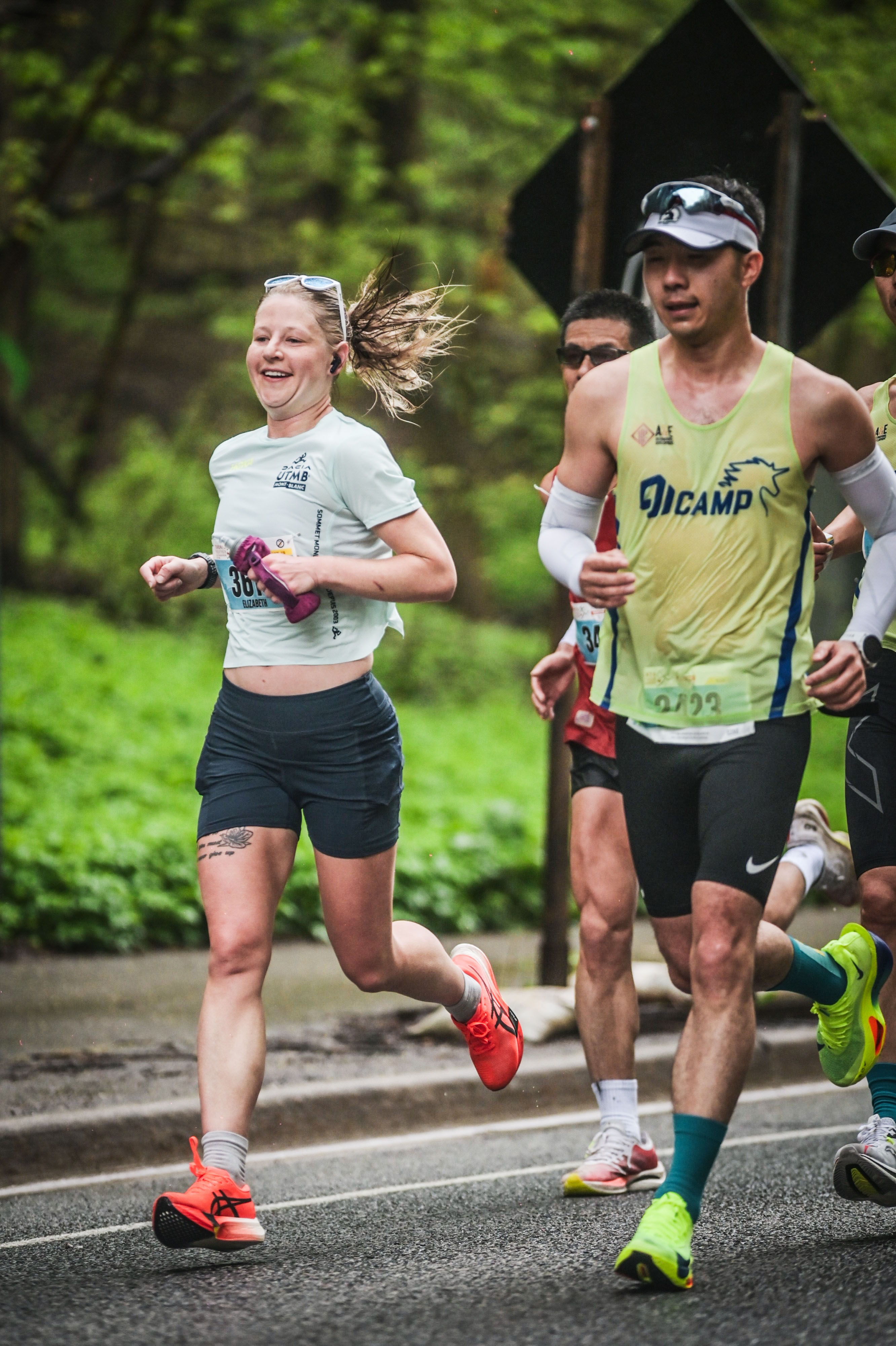
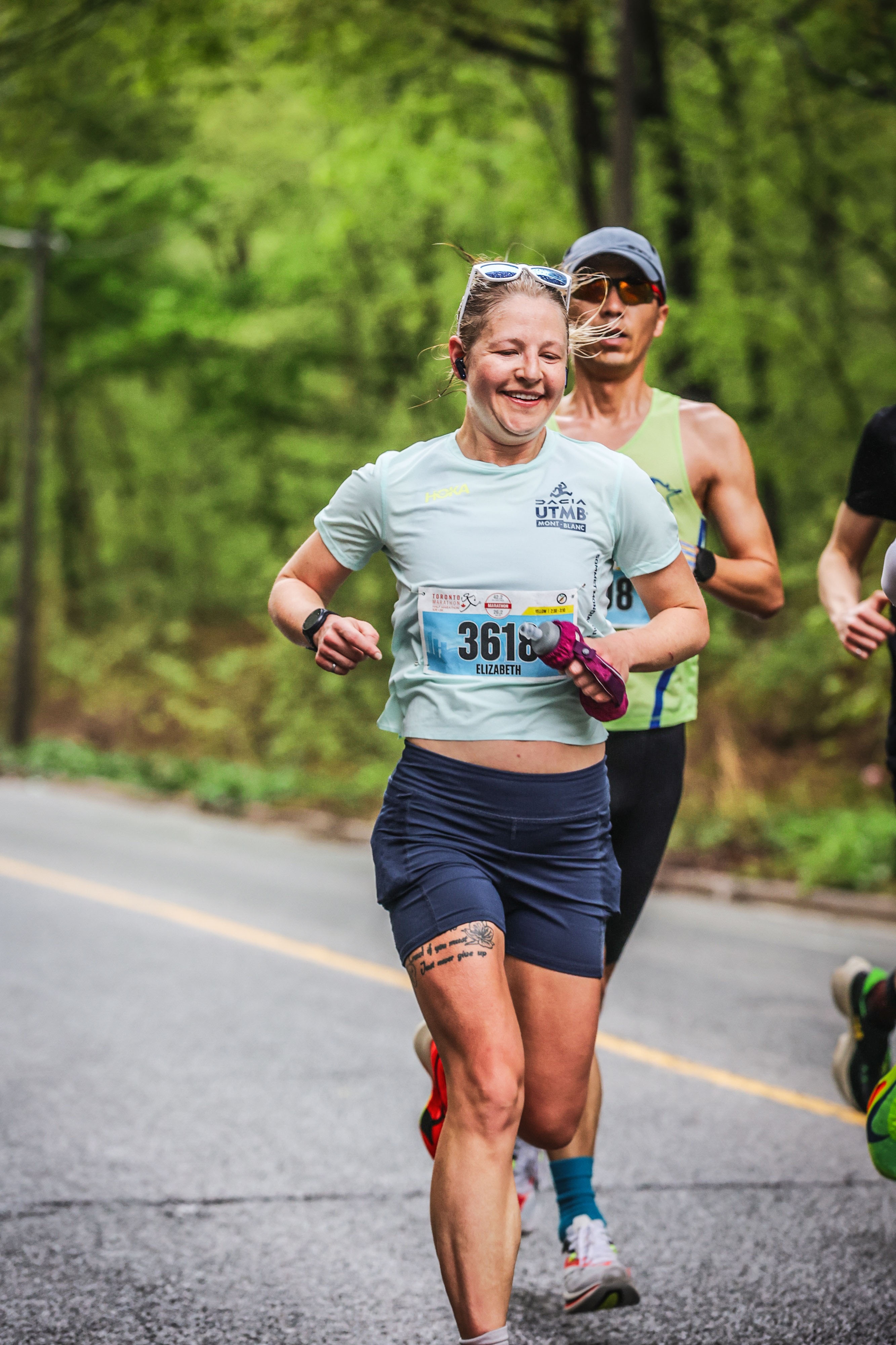
Km 22-26 felt harder, and this is where I had to work the hardest to stay calm and stick with it. Its far enough into the race that I was starting to get tired but there was still a long way to go and it felt daunting. I felt fear that I would start to slow down but after a few minutes, I knew I was okay and in fact, I unintentionally sped up, as if to reassure myself. My watch gps was going nuts through the skyscrapers downtown, I think I was probably running even paces but I saw anything from 3:50 to 4:38 when I looked at my watch, so I just tried not to. I started counting down the km left – it felt good to have less than 20, 20 isn’t that much – that’s not even an hour and a half! I focused on making it to the 2hr mark, when I could start counting down “less than an hour”. I latched on to another small group of men. I knew I was on-pace, but I wasn’t all that focused on my finish time until about 26km when I realized I was on track to hit 28km a few minutes ahead of 3hr pace. I could even slow down to 4:15/km and I would have a minute or two to spare at the finish, but I wasn’t tempted to phone it in yet.

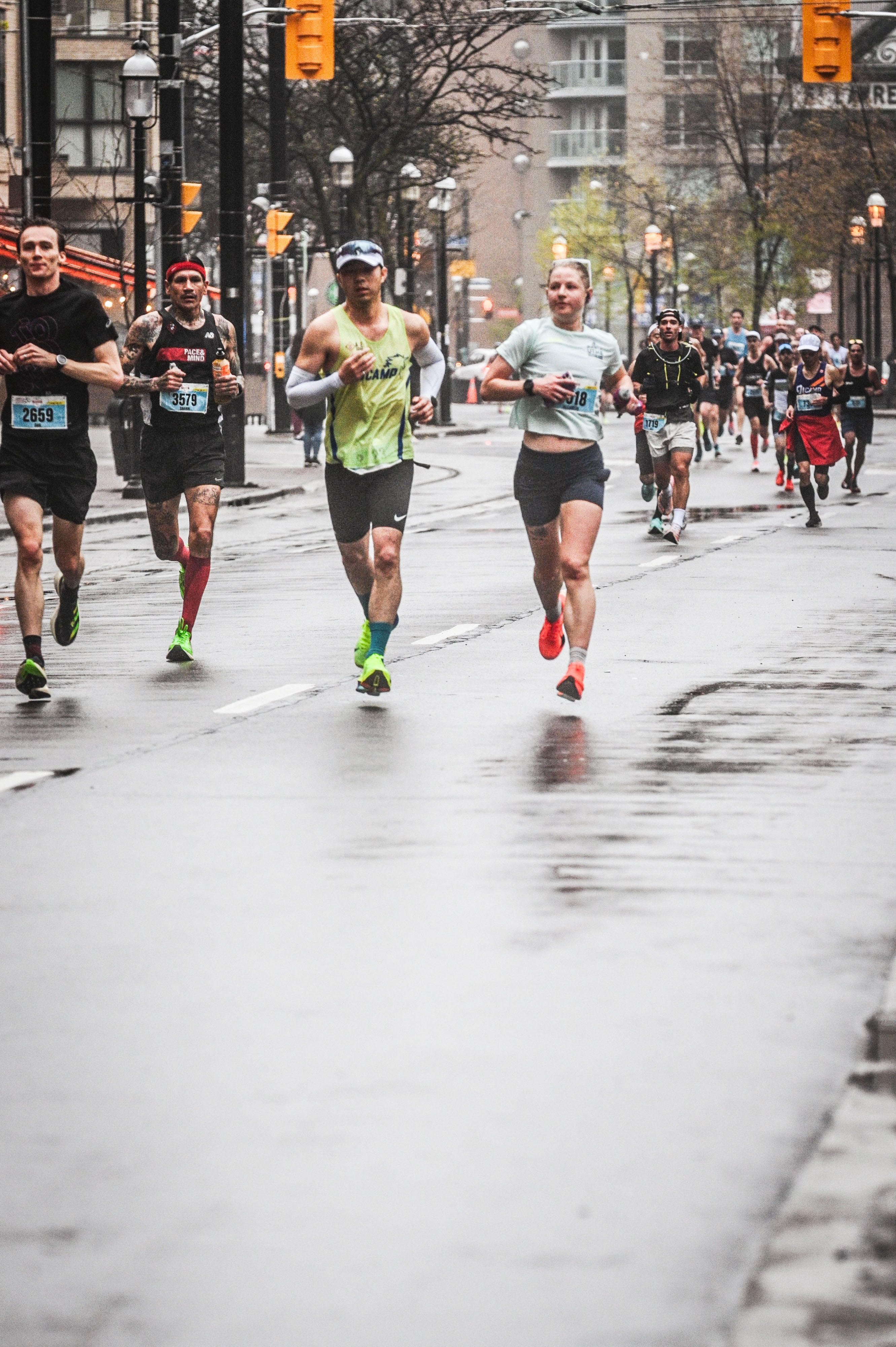
The marathon and half marathon courses converged around 28km and the change in atmosphere and energy pumped me up. Soon I was at 30km, about 3 minutes ahead of 3hr schedule. I’ve never even made it to 30km AT marathon pace, let alone under. With 10km to go, I had something like 46 minutes to finish under 3 hrs and that’s when I really let it sink in that I was going to be able to go sub 3 today. I could even take my foot of the gas. But I didn’t want to, I didn’t need to. My body started to hurt more, my left hip feeling pinched and producing a grinding with every step. It was manageable and I didn’t let it slow me down, I knew it was something I could just deal with for 45 more minutes. Getting my last two gels in was hard and I was nauseous, but I knew it would pass.


I high-fived people, I smiled at everyone, I even yelled sub 3 baby at one particularly enthusiastic spectator. Everyone kept telling me I was the second woman and even though I knew that was only because there is no prize money and essentially no elites showed up, it didn’t make me feel any less special. I converted that excitement to energy. As we neared the hairpin turn at 35km, we encountered runners heading back towards the finish and they were all men. They were mostly young, fit and fast looking and I couldn’t believe I was running almost as fast as them. The last 6km really hurt and I had to focus much more to stay under 4:15/km, but I mostly hung in there. I wasn’t 100% on my math because my watch was slightly off the course markings, but I knew I could be around 2:55-2:57 if I just held on. I dangled carrots in front of me, telling myself “Less than 20 minutes left. Less than 15 minutes, 10 minutes. Can you do this for that much longer?”. The answer was always yes. 2km from the finish felt like an eternity, but once I hit the last km, I opened up and tried to go as fast as I could, grinning from ear to ear and really trying to be present – I’d have to be hit by a bus to not make it now.
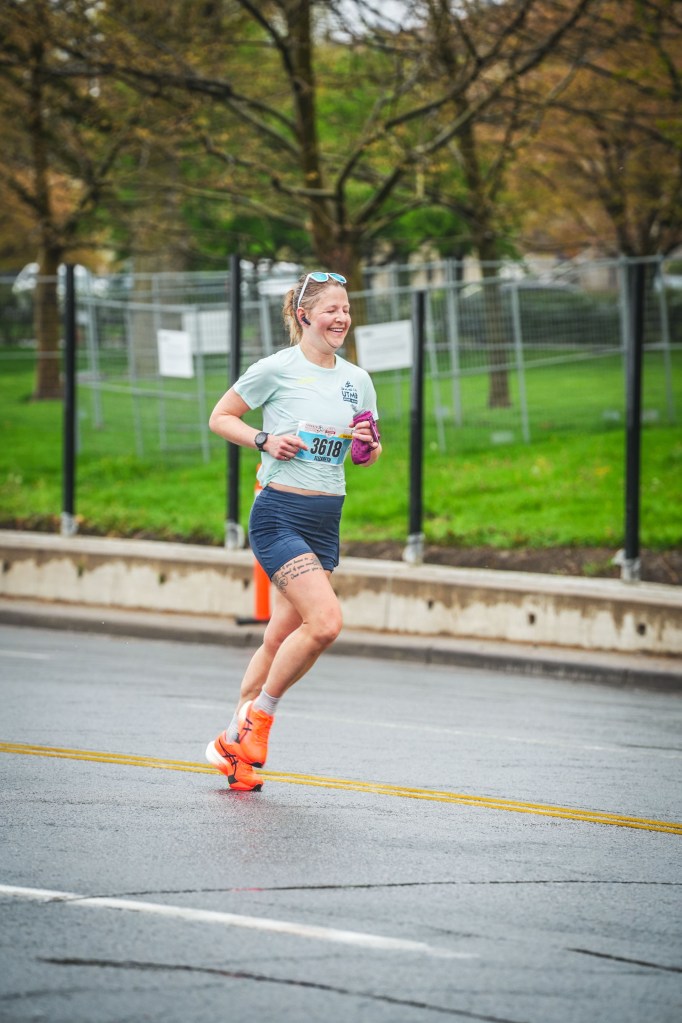
I couldn’t tell my time as a ran across the finish but I assumed it was a 2:57 something, I was elated to find out after that I snuck in with a 2:56, 2:56:54 to be exact – my A goal! Yes, sub 3 was the goal but if you look at my training the last six months, I set my sights on 4:10/km marathon pace. I’m certain that if I had set out that morning searching for a 2:56, it would not have happened – I needed to let it come to me. I ugly cried and finally let myself feel all of the emotion, and then I called Andrei immediately to gush.

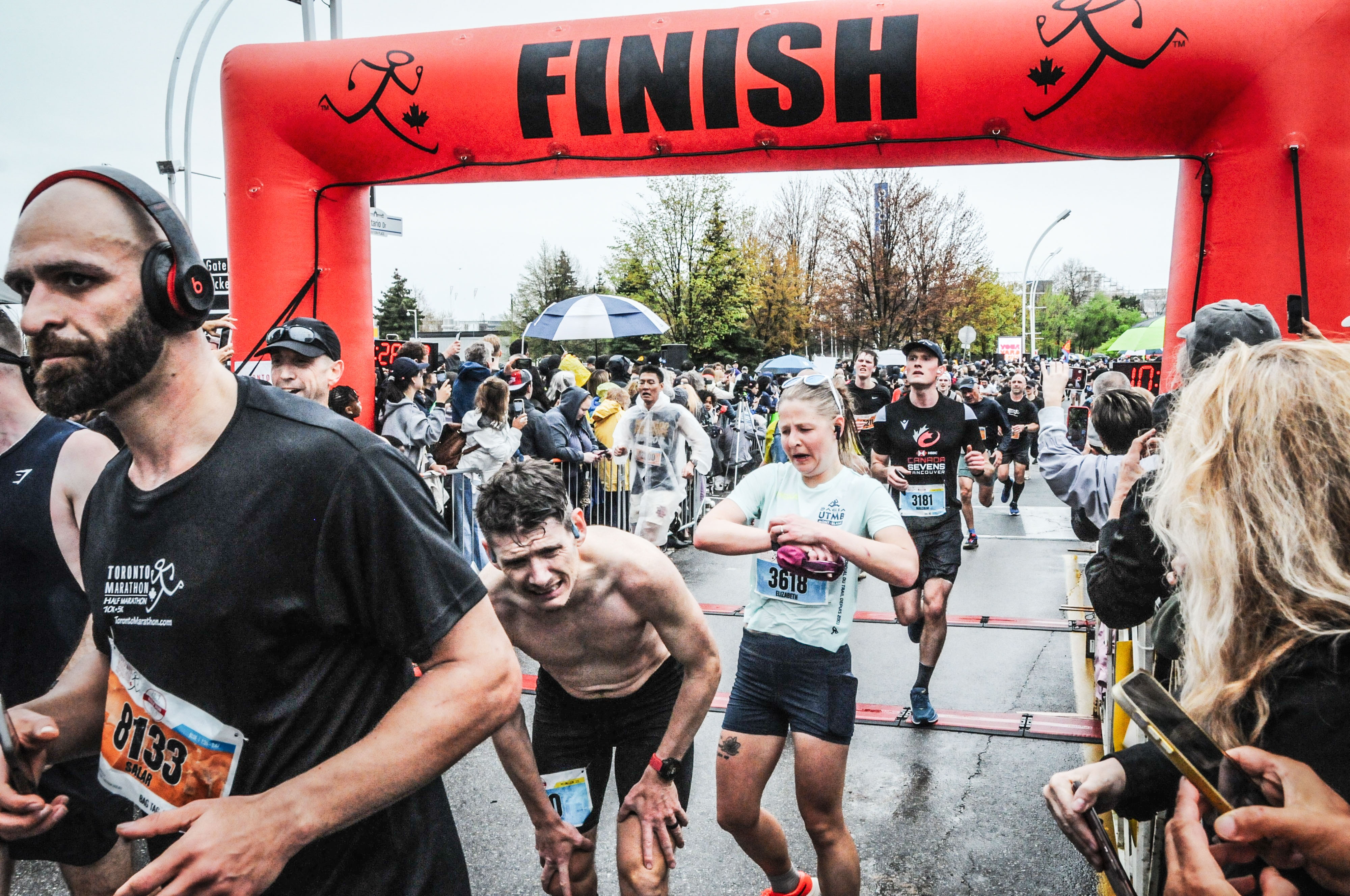
I am still in awe that it finally came together. It feels so strange to have run a marathon and to not have an ounce of regret or dissatisfaction – I have truly never felt that before. I don’t feel a pull to “see what I can do next” or to focus on what’s to come. Instead, I feel sad that the day and the experience is over – I wish I could remember every minute but even as I write this just a few days later, many of the details and minutiae from the race are fading away. I am fulfilled, this feeling is something I’ve chased for many, many years. Only now can I appreciate that this quest for sub 3 was never about the time itself, it was about finally nailing that marathon and proving to myself that I could leave it all out there. I’m grateful for the allure of a marathon time starting with a 2 for pushing me to experience that feeling.
I’m excited to enjoy some time on the trails, to take a step back from being so fixated on my own performance and to focus on celebrating others’ achievements, whether it be the athletes I coach, my fiance Andrei or the many incredible runners here in the Bow Valley that are just getting started.
Some random facts/other details:
- Andy Reed is an amazing coach and while I modified things a little (especially near the end there – ha!) I followed his plan, which you can check out here: https://dirtbags.ghost.io/marathon-progressions/
- I finished 2nd/939 females, 95th/3063 total runners
- I used sports dietician Meghann Featherstone’s carb load guidance for the three days leading up to the race, and on race day morning, aiming for about 450g carbs/ per day for three days. I felt like I was going to explode until race morning when I woke up feeling hydrated and fueled to the nines. I’m good on bagels and pretzels for a while.
- I was worried about it being warm in Toronto for the race so I incorporated some heat training, with 5 sauna sessions of 20-35 minutes in the 10 days leading up to the race. Ask me more about this if you’re curious – thank you Lyen for sharing your sauna with me!!
- I took in 1 single serve pack of Cola Tailwind and 6 Maurten gels (3 with caffeine, 3 without) during the marathon for a total of just under 1000 calories and just over 200g carbs. I had not practiced this fueling strategy so took a risk there, but it worked out. I’ve never felt so good after a marathon, 2 hrs after finishing I had yet to get calories in (bad, bad Liz) and the bonk never came for me.
- I carried my own handheld with water/Tailwind and also grabbed water at most aid stations very little of which made it from the cup into my mouth each time, but I guess it was enough. I usually hate using the aid station cups but I managed to grab the cups and take a drink without having to walk or slow down.
- The last time I ran this course in 2010, I finished in 4 hrs 36 minutes – crazy.
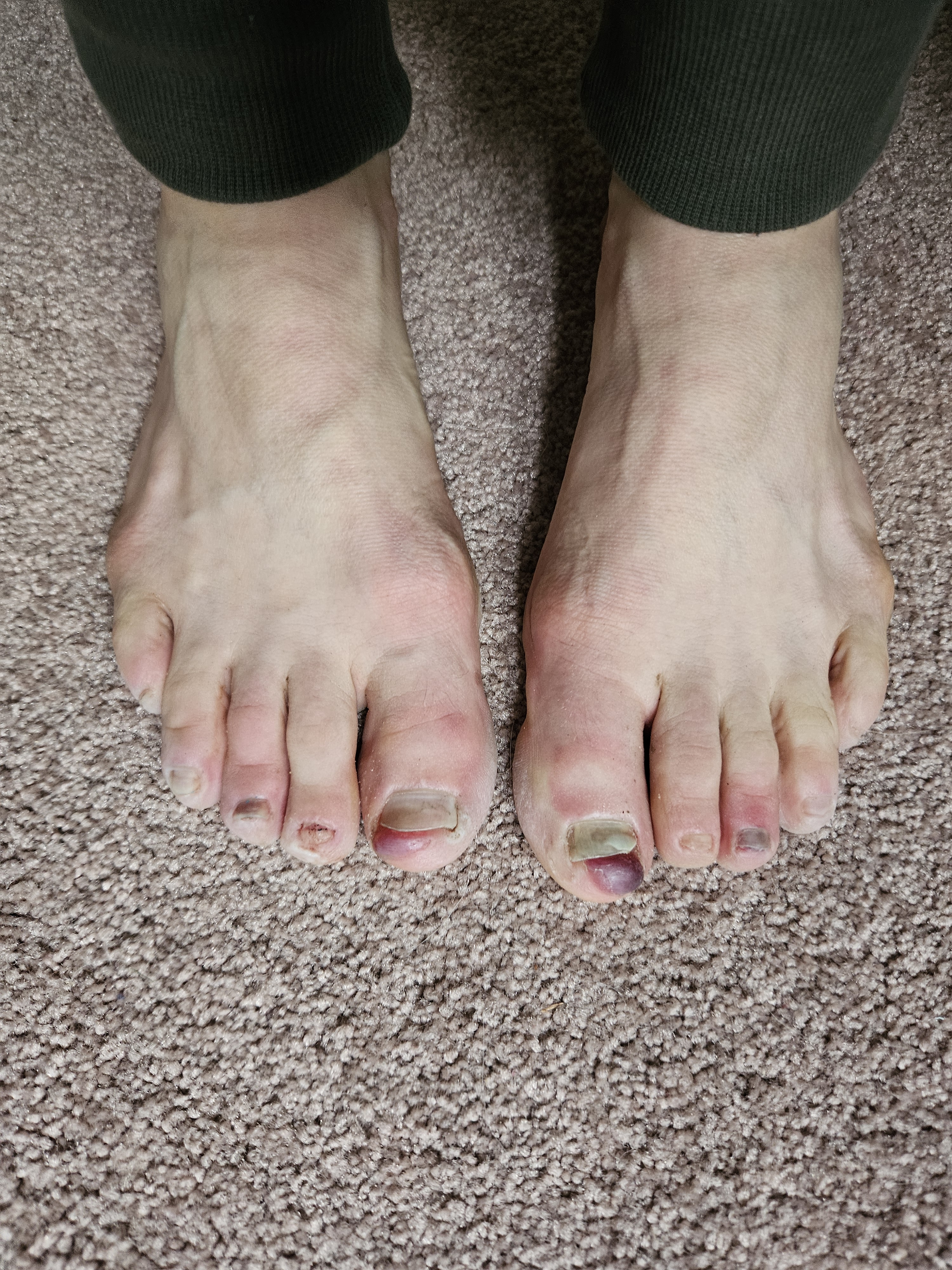
- I thought my feet had never looked uglier after Boston (I had 3 black toenails and had already lost one) but, boy, was I wrong. I can confidently say that NOW my feet have never looked uglier. Despite no discomfort whatsoever during the race, I took my shoes off to discover this:

 This one time I went running